Showing posts with label Rick Rodgers. Show all posts

Friday, October 7, 2011

0 SACHERTORTE, A VIENNESE DELICACY

Sachertorte 4 7 BisLink

"Colors burst in wild explosions
Fiery, flaming shades of fall
All in accord with my pounding heart
Behold the autumn-weaver
In bronze and yellow dying
Colors unfold into dreams
In hordes of a thousand and one
The bleeding
Unwearing their masks to the last notes of summer
Their flutes and horns in nightly swarming
Colors burst within
Spare me those unending fires
Bestowed upon the flaming shades of fall."
- Dark Tranquility, With the Flaming Shades of Fall

Each season has a significant impact on our behaviour and spirit. All four of them impart a special mood as well as a certain rythm to our existence. The explanation for that is very simple: no plant, animal or nor human being can break loose from the forceful and capricious powers of the Universe to which they are submitted and depend on. We just have to accept the fact that there is a greater plan (I'm not talking about God, but about the force behind the entirety of the cosmos) and that most of the time it completely escapes our understanding. There is no other choice for us than to cooperate with the elements in order to benefit from them. Fighting against them will get you nowhere. Save your vigor and be in harmony with them...

Most of us have experienced what it is to be tired and depressed when the sun rarely comes out from behind the clouds and the air is freezing cold or how we perceive the energy released by the extatic singing of birds and the blinding strength of the light in July. Spring fills us with hope, dreams, ambition and confers
a feeling of rebirth, illumination and holiness. Summer gives us the impression that we are invicible, strong, cannot be defeated and endows us with a sentiment of incredible lightness and youth. On the other hand, autumn makes us feel a little nostalgic, serene and pensive, and winter reminds us of the human condition - is a time of intense reflection during which we come back on the past, think of the future and are ready to start everything afresh.

In October I have the urge to reconnect with myself and I become a lot less frivolous, buoyant and I am more enclined to be subject to meditation, solemness or a light case of the blahs. This colorful, exuberant and plentiful period of the year also marks the beginning of a more peaceful and spiritual interval, but it is inevitably characterized by the comencement of Nature's slow decline that lasts until the 21 of December (the winter solstice or the most tenebrous of nights).
"October is nature's funeral month.
Nature glories in death more than in life.
The month of departure is more beautiful than the month of coming -
October than May.
Every green thin loves to die in bright colors."
- Henry Ward Beecher
Fall is somehow ambivalent and keeps blowing hot and cold. It can be luxuriant and gleeful, yet it can simultenously be terribly gloomy, turbulent, fickle, volatile and unpredictable. Nonetheless, it remains my favorite season. It fits my personality well as I am quite "schizophrenic" character-wise, prefer contrast in my life and I believe in the dynamic system of Yin and Yang, the complementary opposites.

I suppose it is the reason why I am attracted to the town of Vienna, although I find any form of cheesy, sappy, glitzy and Hollywoodesque romanticism to be fake, gagworthy and highly annoying. I cannot care less about this aspect of Mozart's home. What I particularly like about this place is the magic and unique atmosphere that surrounds this historic city, especially during the Christmas celebrations (I am more interested in paganism and in celebrating the majesty of winter than following any form of religious message). I would be so happy to visit Vienna when it is under the snow and roam through its
Weihnachtsmarkte.

Anyway, I'm not going to pretend that the capital of the Republic of Austria attracts me solely because of its flamboyant architecture, geographical situtaion or cultural background as that would be a lie (don't get me wrong, I appreciate all of that too). Being a food obssessed girl, my attention is mainly captivated by its legendary, elegant and stylish Art Nouveau coffeehouses (Kaffeehäuser) where one can indulge in exquisitely lavish
Austro-Hungarian pastries and get absorbed by the singular aura of those old-fashioned cafés.
"When the cake arrived, a baroque creation festooned with complex embellishments, he [Rheinhardt] was grateful that the cook had not succombed to the culinary equivalent of modernity. The pressure of his fork forced generous applications of chocolate cream to bulge out between the layers of sponge, and when he took the first mouthful of the dobostorte, the sweetness and intensity of the flavor produced in him a feeling of deep satisfaction."
- Frank Tallis, Vienna Twilight (p114)
I dream of treating myself to dark brews served on silver trays and masterful desserts presented on sober white bone China plates. When I think of all the flaky strudels, rich torte, smooth cakes, buttery sweet breads, nutty rolls, fruity slices, melt-in-the-mouth cookies, stodgy dumplings, comforting pancakes, sturdy coffee beverages and spicy punches, my knees get weak and my head begins to spins ("You spin round, baby right round like a record, baby, right round round round" Dead Or Alive). Now, that is my definition of paradise!

Unfortunately, being momentarily handicapped by my rather empty bank account, trips to foreign countries are proscribed. Consequently, if I want to have a taste of Vienna, I have to fire up the oven, plug the Kitchenaid, get my kitchen all floury as well as my hands dirty and bake my own Austrian "Gebäcke" (pâtisseries). Thankfully, I am not a too bad baker so there is nearly no limit to what I can create.

As I had been fantasizing about "Sachertorte" for a long while and I still owed my boyfriend a late birthday cake (I am a lamentable girlfriend, I know LOL), I thought that this rich and palate-soothing cake would make an awesome Saturday/Sunday afternoon treat or a delightful after-dinner confection
Salève Road 1 6 bis
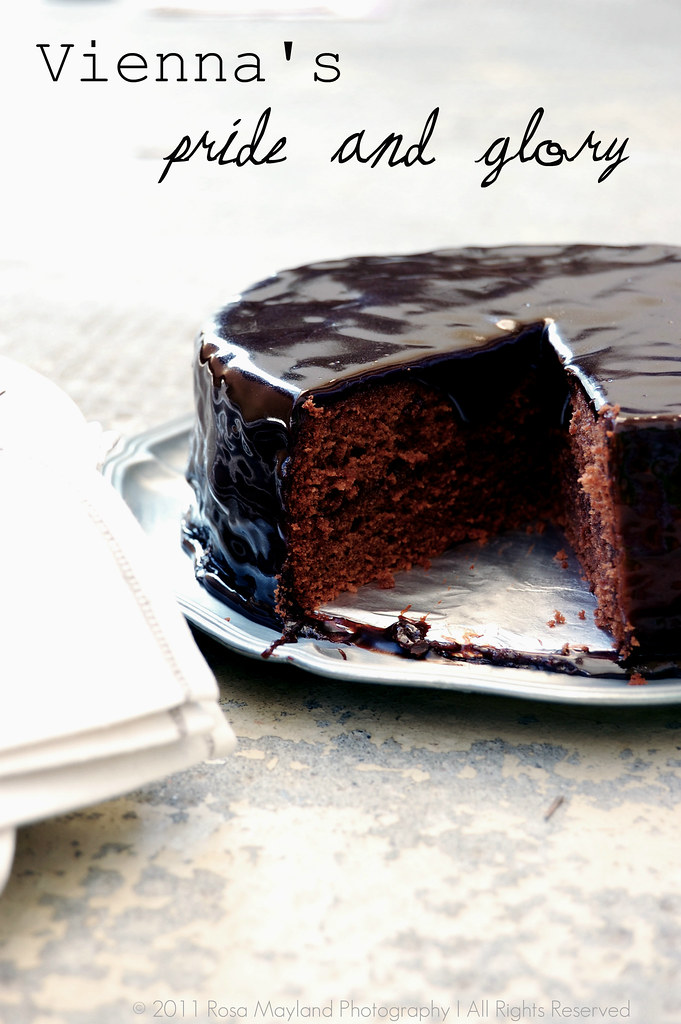
"Sachertorte" is the ultimate culinary symbol of Vienna. Its origin dates back to 1832, when Prince Klemenz Wenzel von Metternich, who was organizing a big party, ordered his personal chef to invent a new dessert for the event. He wanted to impress his guests with a “Masculine” (a macho man, for sure) cake that would be the total opposite of the fluffy, light and creamy “feminine” torten which were so popular and common at this epoch.

The cuisinier was never able to fulfill the prince's request as he fell ill, so the 16 years old 2nd apprentice, Franz Sacher, was forced to take over in the master’s absence. He had the wonderful idea of pairing chocolate with apricot preserves. In his opinion, the aggressive, bitter and manly flavors of the cacao would be wonderfully tempered by the tart tang and sweetness of the jam. The recipe for the choclate cake was no novelty, but on the contrary, the shiny chocolate glaze was a true innovation.

As you can imagine, his creation was a sensation and it met a frank success. Franz was fastly offered a new job at the Hungarian court of Prince Pál Antal Esterházy and then he returned to his birthplace in order to assume a high position at Dehne (now Demel), the royal bakery to the emperor where he offered his two-inch-tall cake Sachertorte” to the masses.

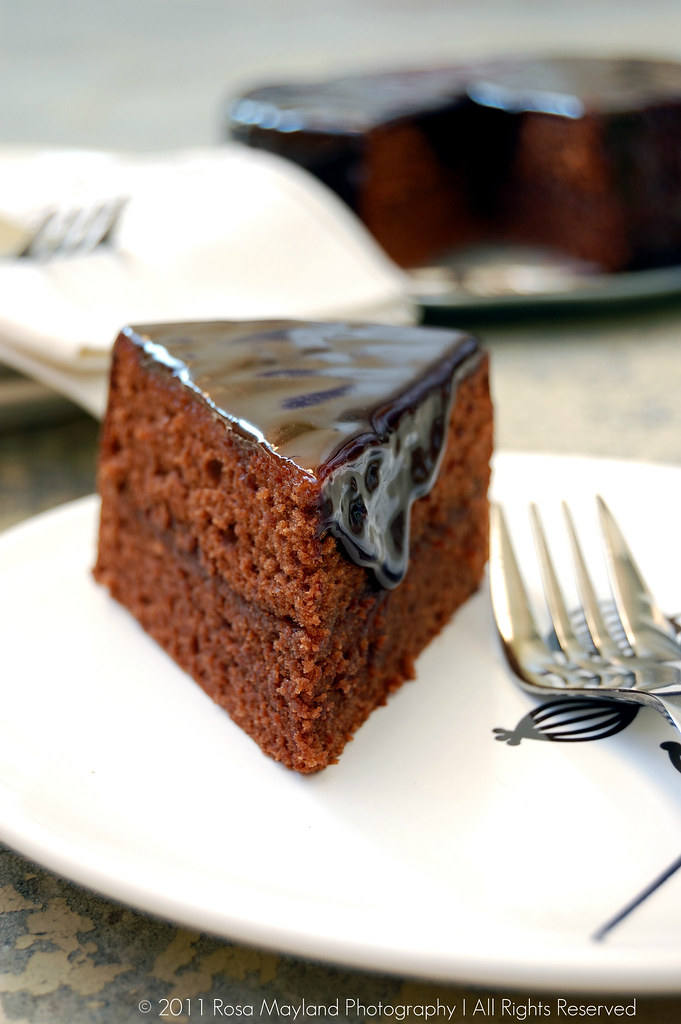
At the beginning of the 20th century, a legal battle over the use of the label "The Original Sacher Torte" developed between the Hotel Sacher and the Demel. After seven years of court depositions, a solution was finally found. The Hotel Sacher was awarded the right to certify its cakes with the famous phrase (“Sacher Torte”- split horizentally, with apricot glaze between the layers and on top of the cake as well as on the sides), whereas the bakery could only add the “Sachertorte” (not split in two) to theirs.

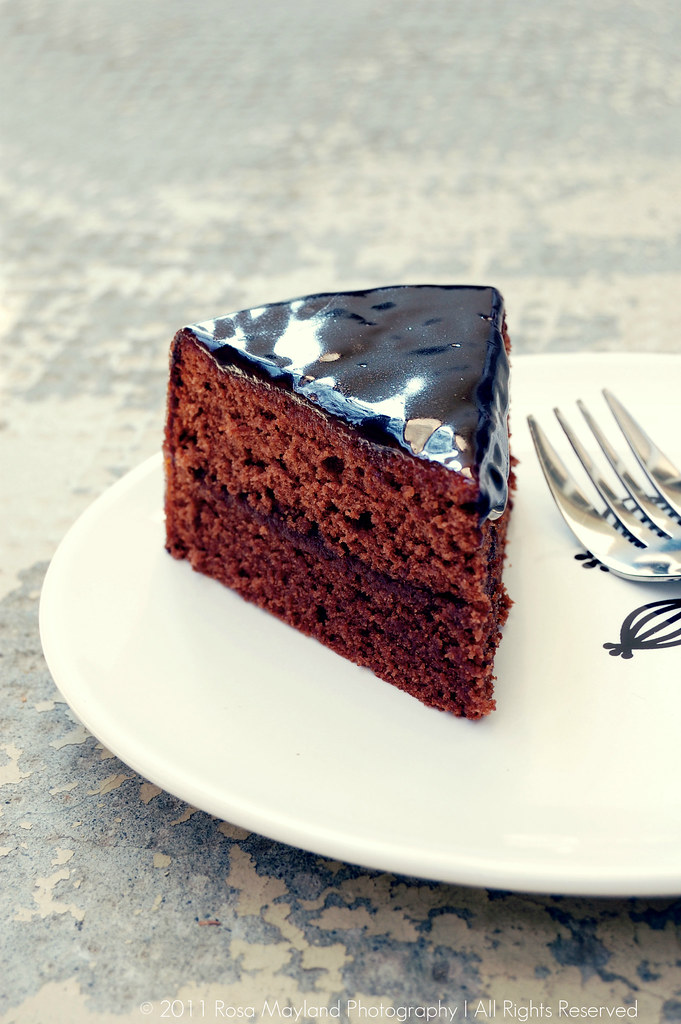
Having been lucky to sample the original goodie (made by Hotel Sacher) a few years ago thanks to my former neighbor, an old lady, who kindly gifted me a slice of that delicacy, I can proudly say that mine stands comparison with the original. It is flawless!

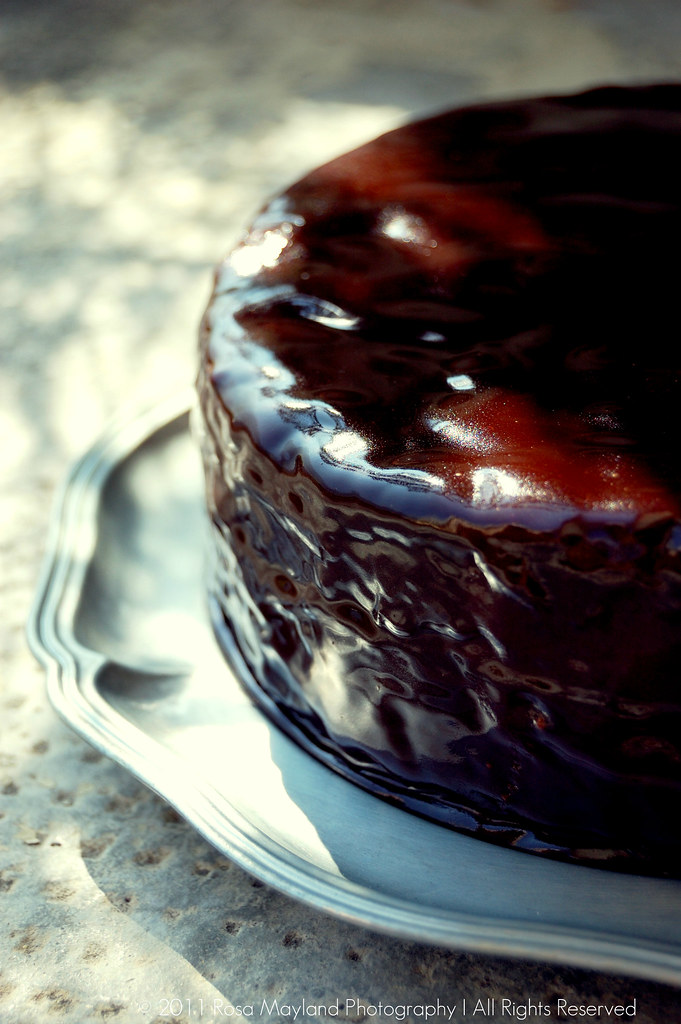
Rick Rodger’s “Sachertorte” is based on “Das Grosse Sacher Backbuch” and is just perfect both in taste and texture. The sponge layers are soft, yet slightly compact (in an titillating way), the chocolate topping is marvelously gooey and the aromas blend incredibly well together. A real poem and ode to ambrosialness!

Related article & recipe:
Dobos Torte” by Rick Rodgers and baked by myself
Vienna’s Sweet Empire” Saveur Magazine

Sachertorte 2 2 Bis
~ Sachertorte ~
Recipe adapted from Rick Rodgers' "
Kaffeehaus: Exquisite Desserts from the Classic Cafés of Vienna, Budapest, and Prague".

Makes 12 to 16 servings.

Ingredients for the "Torte":
135g Good quality bittersweet chocolate, finely chopped
9 Tbs (135g) Unsalted butter, at cool room temperature

120g (1 Cup) Powdered sugar
6 Large eggs, separated & at room temperature

1 Tsp Pure vanilla extract

105g (1/2 Cup) Castor sugar

128g (1 Cup) All-purpose flour

Ingredients For "Assembling & Serving The Torte":
250g (1 Cup) Apricot glaze (recipe)

A small batch chocolate galze (recipe)
Whipped cream, for serving (optional)
Purple flowers 1 3 bis
Directions For The "Torte":
1. Position a rack in the center of the oven and heat to 200° C (400° F).
2. Lightly butter a 18cm (7-inch) springform pan and line the bottom with baking paper. Dust the sides of the pan with flour and tap out the excess.
3. In the top part of a double boiler over very hot, but not simmering water, melt the chocolate. Remove from the heat and let stand, stirring often, until completely cool.
4. Beat the butter in the bowl of a heavy-duty standing mixer fitted with the paddle blade on medium-high speed until smooth, about 1 minute.
5. On low speed, beat in the powdered sugar, then return the speed to medium-high and beat until fluffy, light in color and texture, about 2 minutes.
6. Beat in the egg yolks, one at a time, scraping down the sides of the bowl after each addition.
7. Beat in the chocolate and vanilla.
8. In a lrage bowl, beat the egg whites and granulated sugar with a handheld electric mixer on high speed just until they form soft, shiny peaks - do not overbeat.
9. Stir about 1/4 of the beaten whites into the chocolate mixture to lighten it, then fold in the remaining whites, leaving a few visible wisps of whites.
10. Sift half of the flour over the chocolate mixture, and fold in with a large rubber spatula.
11. Repeat with the remaining flour.
12. Spread the batter evenly in the pan and bake until a toothpick or the blade of a knife inserted in the center comes out clean, about 45 minutes (the cake will dome)
13. Cool on a wire rack for about 10 minutes before removing the sides of the pan, and inverting the cake onto the rack. Remove the paper and reinvert on another rack to turn right side up. Cool completely.
Sachertorte 1 3 Bis
Directions for the "Assembly Of The Cake":
14. Using a long serrated knife, trim the top of the cake to make it level, then cut the cake horizontally into two equal layers.
15. Place the bottom cake layer on an 20cm (8-inch) cardboard round.
16. Brush the top of the cake layer with the warm apricot glaze.
17. Place the second cake layer on top and brush the top and sides of the cake with the remaining glaze.
18. Transfer the cake to a wire rack placed over a jelly-roll pan lined with waxed paper. Let cool until the apricot glaze is set.
19. Make the chocolate glaze just before covering the cake with it (it must be fresh and warm).
20. Pour all of the warm chocolate glaze on top of the cake. Using a metal offset spatula, gently smooth the glaze over the cake, allowing it to run down the sides, making sure that it completely coats the cake (patch any bare spots with the spatula and the icing that has dripped).
21. Cool until the glaze is barely set, then transfer the cake to a serving plate and refrigerate until the glaze is completely set, at least 1 hour.
22. Before serving, let the cake stand at room temperature for about 1 hour.
Fall Sierne 1 2 bis
Comments:
Quality ingredients will really make a difference in this cake, so make sure the use only the best chocolate and apricot preserves.
I used 70% cocoa chocolate for both the cake and the glaze.
For best results, be generous with the apricot glaze. Try not to miss a spot, and let plenty sink into the cake before you pour on the chocolate.
Don't expect the cake layer to look perfect; sometimes the air bubbles are large and make holes in the top of the cake. If that happens, take some cake trimmings and mash them with a little of the apricot glaze in order to make a paste, then with a metal icing spatula, "spackle" the holes with the mixture.
The cake can be prepared up to 2 days ahead and stored in an airtight cake container at room temperature or in the fridge.

Serving suggestions:
Slice the cake with a sharp knife dipped into hot water.
Serve with a large dollop of unsweetened whipped cream (for dipping), if desired and a cup of milk coffee.


~~~~~~~~~~~~~~~~~~~~~~

Etant donné que la recette pour ce gâteau est assez longue et complexe, je n'ai malheureusement pas eu le courage de la traduire en français. Je m'excuse auprès de tous mes amis lecteurs et blogueurs francophones!

De ce fait, je vous suggère de vous rendre sur Google Translate afin d'obtenir une traduction (assez approximative, mais utilisable) de mon billet. Merci!
Sachertorte 3 bis

Wednesday, August 26, 2009

0 DOBOS TORTE - THE DARING BAKERS

Every 27th of the month is synonymous of challenge and baking for the famous Daring Bakers. On this very special date, members of that "bakers' club" are asked to blog about the latest recipe they had to test. For everyone who is part of this group, it is always a very special and exciting time of the month as we are finally able to reveal our creations and see those of our fellow bakers.

August's Daring Bakers' Challenge has been picked by Lorraine at "Not Quite Nigella" (Australia) and Angela at "Spoonful of Sugar" (UK) who have chosen the famous "Dobos Torta", a Hungarian speciality...
This Kaffeehaus (Viennese café) cake is very popular in Hungary, but also in Slovakia. It was named after it's creator József C. Dobos (1847-1924) in 1884. The "Dobos Torta or Torte" is a five-layer sponge cake, that contains Chocolate buttercream and is topped with thin caramel slices. The sides of the cake are sometimes coated with ground hazelnuts, chestnuts, walnuts or almonds.

Although I have been fantasizing about making this wonderful cake since very long, the choice of that recipe just fell at the worst time of the year. Imagine baking a cake with buttercream when it's 36.4° C (97.52° F) outside and the himidity level is of 73% and you apartment is like a furnace... Either you have to be stark raving mad or living in an air-conditioned house. So, when you are under the weather, very sane and you place is hotter than than the entrails of Hell, then let me tell you that it's absolutely suicidal, exhausting and it's a real pain in the neck to bake something fancy like that!!!

This sweltering heatwave made everything more complicated (even what wasn't at the origin - like this cake) and transformed every little task into a big one. Not only did I lose 10 pounds while baking, but my cake was also showing signs of tiredness and melting before my eyes. After spreading a first layer of buttercream, I had to put my cake in the fridge for at least 30 minutes before I could continue adding the next layer. My incessant ballet between the fridge and the working counter was time-consuming and fatiguing. And to crown it all, my caramel didn't want to harden rapidly and prefered to start liquifying (due to the high humidity). Really nerve-racking!

After hours of fighting against the elements, I finally got my cake together. My biggest concern then was focused on the next step: immortalizing the "Dobos Torte". How was I going to take pictures of it in that heat? After getting it in and out of the fridge at regular intervals in order to avoid a total disaster (melted buttercream and suffering cake), I was more or less able to take a few decent shots.

I can tell you that after having taken my last picture of this cake (or impending doom LOL), I felt kaput, as if I had run a marathon or crossed a desert by foot. The whole experience was so laborious and nearly traumatizing. Anyway, I ended up with a presentable "Dobos Torte" that tasted heavenly, so all that suffering was not in vain!

I must say that I was very proud of my accomplishment as I was not only able to beat the heat, but also it's devastating effects and learnt how to deal with it all. Those long hours of sweating, panicking and trying to find ways to overcome the difficulties linked to the scortching heat made me a stronger baker. My "Dobos Torte" still ended up looking and tasting great no matter the obstacles.

I followed the recipe to the letter, but decided to make extra thin sponge cake layers and produced seven rounds instead of six. I also used half the quantity more buttercream that I flavored with tonka bean. All that resulted in a cake that was smooth like a pillow, ambrosially chocolatty (with a little twist of tonka) and to die for.

I really want to thank Lorraine and Angela for having chosen that long-craved Hungarian treat and helped me "master" the art of baking while going through a heatwave!!!

~ DOBOS TORTE ~
Recipe based
on a recipe from Rick Rodgers' cookbook "Kaffeehaus: Exquisite Desserts from the Classic Caffés of Vienna, Budapest, and Prague".

Equipment
2 baking sheets
9” (23cm) springform tin and 8” (21cm) cake tin, for templates
Mixing bowls (1 medium, 1 large)
A sieve
A double boiler (a large saucepan plus a large heat-proof mixing b
owl which fits snugly over the top of the pan)
A small saucepan
A whisk (you could use a balloon whisk for the entire cake, but an electric hand whisk or stand mixer will make life much easier)
A metal offset spatula
A sharp knife

A 7 1/2” cardboard cake round, or just build cake on the base of a sprinfrom tin.
A piping bag and tip, optional


Preparation times
Sponge layers: 20 mins prep, 40 mins co
oking total if baking each layer individually. Buttercream: 20 mins cooking. Cooling time for buttercream: about 1 hour plus 10 minutes after this to beat and divide.
Caramel layer: 10-15 minutes.
Assembly of whole cake: 20 minutes

SPONGE CAKE LAYERS

Ingredients:
6 Large eggs, separated, at room temperature
1 1/3 cups (162g) Confectioner's (icing) sugar, divided
1 Tsp (5g) Pure vanilla extract

1 Cup plus 2 Tbs (112g) Sifted cake flour (substitute: 95g plain flour + 17g cornstarch sifted together)
A pinch of sea salt

Method:
1. Position the racks in the top and centre thirds of
the oven and heat to 400° F (200° C). 2. Cut six pieces of parchment paper to fit the baking sheets. Using the bottom of a 9" (23cm) springform tin as a template and a dark pencil or a pen, trace a circle on each of the papers, and turn them over (the circle should be visible from the other side, so that the graphite or ink doesn't touch the cake batter).
3. Beat the egg yolks, 2/3 cup (81g) of the confectioner's (icing) sugar, and the vanilla in a medium bowl with a mixer on high speed until the mixture is thick, pale yellow and forms a thick ribbon when the beaters are lifted a few inches above the batter, about 3 minutes. (You can do this step with a balloon whisk if you don't have a mixer.)
4. In another bowl, using clean beaters, beat the egg whites until soft peaks form. Gradually beat in the remaining 2/3 cup (81g) of confectioner's (icing)sugar until the whites form stiff, shiny peaks. Using a large rubber spatula, stir about 1/4 of the beaten whites into the egg yolk mixture, then fold in the remainder, leaving a few wisps of white visible. Combine the flour and salt. Sift half the flour over the eggs, and fold in; repeat with the remaining flour.
5. Line one of the baking sheets with a circle-marked paper. Using a small offset spatula, spread about 3/4cup of the batter in an even layer, filling in the traced circle on one baking sheet. Bake on the top rack for 5 minutes, until the cake springs back when pressed gently in the centre and the edges are lightly browned. While this cake bakes, repeat the process on the other baking sheet, placing it on the centre rack. When the first cake is done, move the second cake to the top rack. Invert the first cake onto a flat surface and carefully peel off the paper. Slide the cake layer back onto the paper and let stand until cool. Rinse the baking sheet under cold running water to cool, and dry it before lining with another parchment. Continue with the remaining papers and batter to make a total of six layers. Completely cool the layers. Using an 8" springform pan bottom or plate as a template, trim each cake layer into a neat round. (A small serrated knife is best for this task).

Remarks:
The sponge layers can be prepared in advance
and stored, interleaved with parchment paper and well-wrapped, in the fridge, overnight.

CHOCOLATE BUTTERCREAM

Ingredients:

4 Large eggs, at room temperature
1 Cup (200g) Caster (ultrafine or superfine white) sug
ar
4oz (110g) Bakers chocolate or your favourite dark chocolate, finely chopped
2 Sticks plus 2 Tbs (250g) Unsalted butter, at room tempe
rature.

Method:
1. Prepare a double-boiler: quarter-fill a large saucepan with water and bring it to a boil.
2. Meanwhile, whisk the eggs with the sugar until pale a
nd thickened, about five minutes. You can use a balloon whisk or electric hand mixer for this.
3. Fit bowl over the boiling water in the saucepan (water should n
ot touch bowl) and lower the heat to a brisk simmer. Cook the egg mixture, whisking constantly, for 2-3 minutes until you see it starting to thicken a bit. Whisk in the finely chopped chocolate and cook, stirring, for a further 2-3 minutes.
4. Scrape the chocolate mixture into a medium bowl and leave to cool to room temperature. It should be quite thick and sticky in consist
ency.
5. When cool, beat in the soft butter, a small piece (ab
out 2 tablespoons/30g) at a time. An electric hand mixer is great here, but it is possible to beat the butter in with a spatula if it is soft enough. You should end up with a thick, velvety chocolate buttercream. Chill while you make the caramel topping.

Remarks:
The buttercream can be prepared in advance and stored in the fridge for up to 5 days.
If you're in Winter just now your butter might not soften enough at room temperature, which leads to lumps forming in the buttercream. Make
sure the butter is of a very soft texture I.e. running a knife through it will provide little resistance, before you try to beat it into the chocolate mixture. Also, if you beat the butter in while the chocolate mixture is hot you'll end up with more of a ganache than a buttercream!

CARAMEL TOPPING

Ingredients:
1 cup (200g) Caster (superfine or ultrafine white) sugar
12 Tbs (180ml/g) water
8 Tsp (40g) Lemon juice

1 Tbs Neutral oil (e.g. grapeseed, rice bran, sunflower)

Method:
1. Choose the best-looking cake layer for the caramel top. To make the c
aramel topping: Line a jellyroll pan with parchment paper and butter the paper. Place the reserved cake layer on the paper. Score the cake into 12 equal wedges. Lightly oil a thin, sharp knife and an offset metal spatula.
2. Stir the sugar, water and lemon juice in a small saucepan. Bring to a boil over a medium heat, stirring often to dissolve the sugar. Once dissolved int
o a smooth syrup, turn the heat up to high and boil without stirring, swirling the pan by the handle occasionally and washing down any sugar crystals on the sides of the pan with a wet brush until the syrup has turned into an amber-coloured caramel.

3. The top layer is perhaps the hardest part of the whole cake so make sure you have a oiled, hot offset spatula ready. I also find it helps if the cake layer hasn't just been taken out of the refrigerator. I made mine ahead of time and the cake layer was cold and the toffee set very, very quickly—too quickly for me to spread it. Immediately pour all of the hot caramel over the cake layer. You will have some leftover most probably but more is better than less and you can always make nice toffee pattern using the extra to decorate. Using the offset spatula, quickly spread the caramel evenly to the edge of the cake layer. Let cool until beginning to set, about 30 seconds. Using the tip of the hot oiled knife (keep re-oiling this with a pastry brush between cutting), cut through the scored marks to divide the caramel layer into 12 equal wedges. Cool another minute or so, then use the edge of the knife to completely cut and separate the wedges using one firm slice movement (rather than rocking back and forth which may produce toffee strands). Cool completely.

Remarks:
I recommend cutting, rather than scoring, the cake layer into wedges before covering in caramel (reform them into a round). If you have an 8” silicon round form, then I highly recommend placing the wedges in that for easy removal later and it also ensures that the caramel stays on the cake layer. Once set, use a very sharp knife to separate the wedges.

ASSEMBLING THE DOBOS TORTE

Method:
1. Divide the buttercream into six equal parts.
2. Place a dab of chocolate buttercream on the middle of a 7 1/2” cardboard round and top with one cake layer. Spread the layer with one part of the chocolate icing. Repeat with 4 more cake layers. Spread the remaining icing on the sides of the cake.
3. Optional: press the finely chopped hazelnuts (1/2 Cup (50g) roasted, peeled and finely chopped hazelnuts) onto the sides of the cake.
4. Propping a hazelnut under each wedge so that it sits at an angle, arrange the wedges on top of the cake in a spoke pattern. If you have any leftover buttercream, you can pipe rosettes under each hazelnut or a large rosette in the centre of the cake.

STORAGE
Refrigerate the cake under a cake dome until the icing is set, about 2 hours. Let slices come to room temperature for the best possible flavour.
I should also note that the cake will cut more cleanly when chilled.

****************

Etant donné la longueur du texte original, je n'ai malheureusement pas pu faire une traduction française de ce billet et je m'en excuse auprès de tous mes amis lecteurs et blogueurs francophones!

C'est pourquoi je vous suggère de vous rendre sur les blogs mentionnés ci-dessous. Vous y trouverez cette recette en version française.

Chez Jasmine de "Jasmine Cuisine" (Canada)
Chez Isa de "Les Gourmandises d'Isa" (Canada)


breakfasts time Copyright © 2011 - |- Template created by O Pregador - |- Powered by Blogger Templates